



A cup should not be able to bend a shopping day around itself. Yet the latest Stanley Tumbler buzz proves how fast a color can turn into a chase, especially when American shoppers see a limited drop tied to a mood they already want to wear, post, gift, and carry. The newest heat is not coming from plain utility. It is coming from Stanley’s LoveShackFancy summer release, where Lemon Haze and Polaroid Rose prints landed across the Quencher H2.0, Quencher ProTour, and All Day Slim Bottle, with listed prices from $50 to $65. For readers tracking consumer habits through consumer lifestyle trend coverage, this frenzy says more about identity than hydration. A limited edition Stanley cup now sits in the same mental lane as sneakers, concert merch, and beauty drops. You are not buying a container alone. You are buying the feeling that you caught the moment before it moved on.
Why Stanley Tumbler Demand Turns Color Into Culture
The first mistake is treating this as a mystery. People do not line up, refresh product pages, or compare resale screenshots because stainless steel changed overnight. They do it because the object has become a social signal. A viral tumbler color works because it is visible in the exact places where modern life gets judged: the desk, the car cup holder, the gym bag, the stroller cup tray, the beach tote, the classroom, and the TikTok frame.
That visibility turns the product into a tiny billboard for taste. It also gives the buyer a low-risk way to join a bigger style moment. You can skip a full wardrobe shift and still carry the color everyone recognizes.
Why the viral tumbler color feels bigger than a kitchen accessory
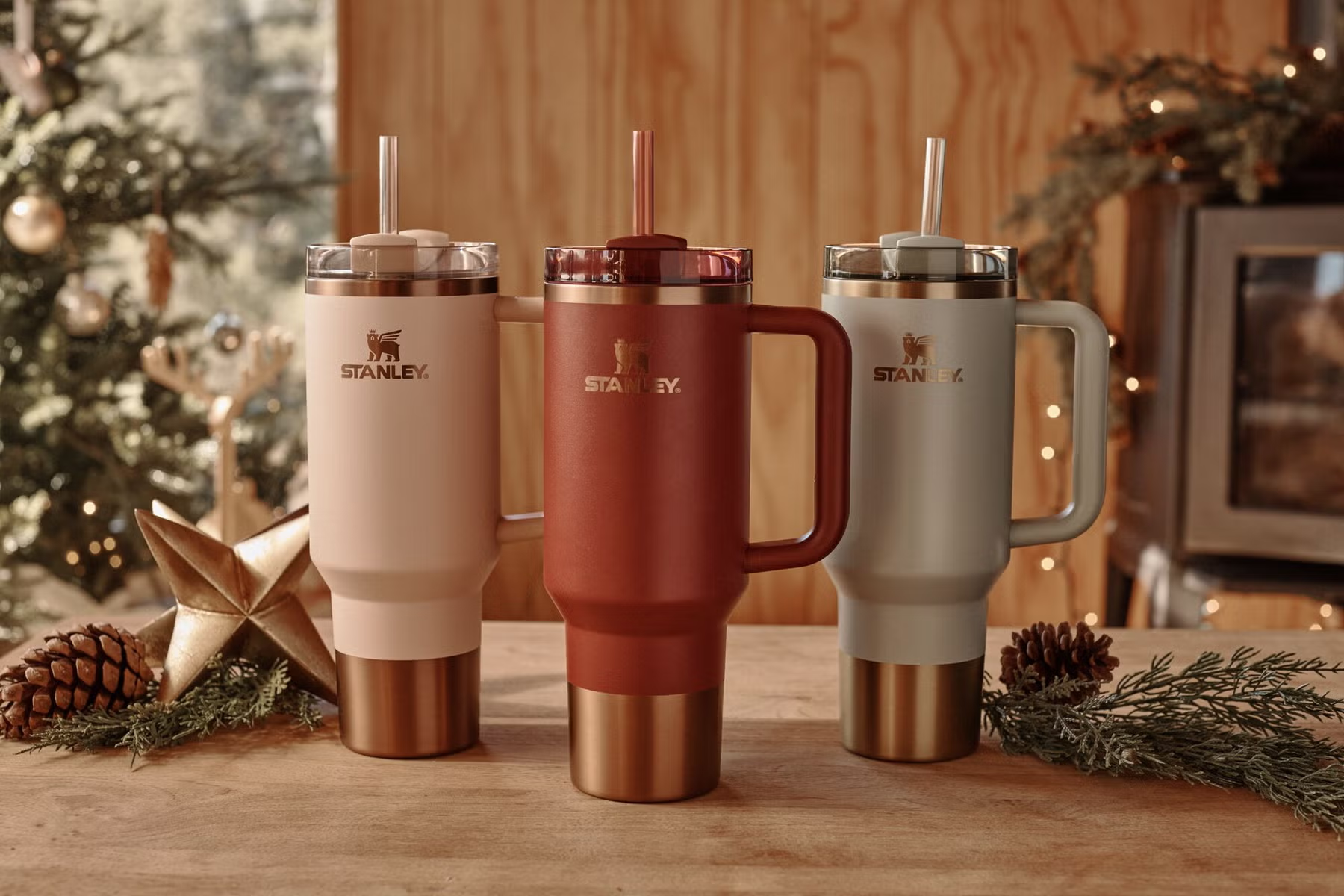
Color is doing the heavy lifting. Lemon Haze reads like summer without needing a logo to explain it. Polaroid Rose carries the soft pink mood that has been floating through fashion, beauty, and home decor for years. LoveShackFancy already owns that romantic, floral, slightly nostalgic look, so the collaboration gives the cup a full world to live inside rather than a paint name on a product page. The brand page lists the same prints across drinkware and matching activewear, which makes the launch feel like a set, not a single item.
That matters in the United States because shoppers often build small personal uniforms. A nurse may want a cup that matches her badge reel. A college student may want one that fits her dorm room palette. A mom running errands may want the one thing in her cart that feels chosen, not rushed. The cup becomes a daily prop.
Here is the non-obvious part: the frenzy is not only about being seen. It is also about control. A $65 cup is not cheap, yet it is still easier to reach than a designer bag or a room makeover. When rent, groceries, and gas keep pressing on budgets, a limited edition Stanley cup offers a contained splurge. It gives you the feeling of a style upgrade without blowing up the month.
How scarcity makes a limited edition Stanley cup feel personal
Scarcity changes the way shoppers read an object. A standard color asks, “Do you like me?” A limited color asks, “Can you get me?” That tiny shift turns browsing into a contest. It also makes hesitation feel costly, which is why people who were only half-interested at breakfast can be hunting stock alerts by lunch.
Stanley has already seen what happens when limited colors hit the wrong nerve. In early 2024, Time reported that Target’s Cosmo Pink and Target Red cups sold out online and in stores after shoppers rushed displays, with one TikTok video drawing more than 20 million views. That old scene still shapes the way people react to new drops. Even if a launch is calmer, buyers remember the footage. Memory becomes part of the marketing.
The better lesson is not “people are irrational.” That is too easy. The sharper read is that small products can carry big social timing. When a viral tumbler color appears, shoppers are not only asking whether they need another cup. They are asking whether they want to be part of the week when everyone was talking about it.
What the New Color Drop Tells American Shoppers
The new color conversation sits at the crossing of fashion, function, and online speed. That is why it keeps spreading. The cup does a job, but the design gives people a reason to care today instead of someday. If it were only useful, any insulated bottle would do. If it were only pretty, it would end up in a cabinet. The sweet spot is the mix.
This is also why the release feels different from a normal restock. A restock rewards patience. A color drop rewards timing. In a country where shoppers track sneaker apps, beauty drops, and holiday decor launches, the Stanley release fits a pattern people already understand.
The Stanley Quencher moved from hydration gear to outfit planning
The Stanley Quencher became a fashion object because it is carried in public. That sounds simple, but it explains the entire curve. A slow cooker can be colorful and still stay on a counter. A towel can be cute and stay inside a bathroom. A 40-ounce cup rides shotgun, sits beside a laptop, appears in school pickup lines, and shows up in mirror selfies.
That visibility turns color into strategy. You might pick a neutral bottle for work, a bright one for summer, and a floral one for errands when the rest of the outfit is plain. The LoveShackFancy page lists Lemon Haze and Polaroid Rose across several cup styles, which lets shoppers choose between the larger Quencher H2.0, the ProTour flip-straw shape, or the slimmer bottle without leaving the print family.
A real-world example is the American weekend bag. Think of a Saturday that includes iced coffee, a Target run, youth soccer, and a late lunch. The cup is in every stop. A floral Stanley Quencher may look decorative online, but in that setting it works like a small personal anchor. It says, “This is mine,” in a day full of shared cars, shared schedules, and shared errands.
Why collectors chase color stories, not water bottles
Collectors are not collecting water bottles in the plain sense. They are collecting chapters. The Valentine’s color. The Starbucks color. The holiday bow print. The summer floral. Each drop marks a season, a trip, a gift, or a tiny personal win. That is why the resale market can look strange from the outside. The price is not tied only to steel, lid design, or insulation.
The counterintuitive part is that too many colors can make one color feel more special, not less. A huge wall of options would seem like it should weaken demand. Instead, it trains shoppers to compare shades the way sneaker fans compare releases. One pink is not another pink. One yellow is not another yellow. The differences get smaller, but the emotions get louder.
For content publishers, this is why a simple product post often underperforms. A stronger angle connects the object to routine, status, gifting, and timing. A piece like best drinkware trends for everyday routines can support the search intent better than a thin “new color is here” post because readers want to know whether the drop fits their life.
The Frenzy Is Also a Lesson in Smart Buying
The fastest way to ruin a fun drop is to let panic spend your money. Limited releases are built to compress time. A countdown clock, a sold-out size, and a wave of posts can make a buyer feel late even when the product launched ten minutes ago. The better move is to decide your rules before the rush starts.
That does not mean the excitement is fake. It means excitement needs a fence. The smartest shoppers enjoy the hunt, but they do not let a stranger’s cart screenshot decide their budget. A buyer who sets rules ahead of time can still have fun when the drop opens. She also knows when to close the tab.
How to shop a limited edition Stanley cup without panic
Start with the version you would use most. If you commute, the lid matters. If you carry it in a tote, a flip-straw design may beat an open straw. If it will sit on your desk, the larger handle style may be fine. LoveShackFancy lists the 40-ounce Quencher H2.0 at $65, the 30-ounce Quencher ProTour at $55, and the All Day Slim Bottle at $50, so the best pick is not always the largest one.
Set a top price before you open resale apps. That number should include shipping, taxes, and the chance that the cup arrives with a scratch or no original packaging. A small premium may be acceptable for a gift. Paying triple because social media made you feel behind is a different story.
The FTC’s online shopping guidance tells buyers to compare sellers, check products, keep purchase records, review return policies, and pay by credit card when possible. That advice fits limited drops because scammers love urgency. A fake shop can look polished when you are moving fast. Slow down once before you pay.
What resale listings get wrong about value
Resale prices often pretend that rarity and value are the same thing. They are not. Rarity means fewer people can get the product at retail. Value means the product still feels worth the money after the online noise cools. Those two ideas overlap sometimes, but not always.
A buyer who wants the cup for daily use should judge it by future boredom. Ask a plain question: will you still like this print in October, when the launch posts are gone and your feed has moved to fall colors? If yes, the purchase has a stronger case. If the answer depends on what everyone else is buying, step back.
Business Insider reported that Stanley tested EQL for the Chocolate Gold Quencher release to reduce bot and reseller pressure, using a sign-up system and a one-cup limit for selected shoppers. That tells you something useful. Even brands know the frenzy can get away from real fans. A healthier drop is one where people who will use the product have a better shot than people trying to flip it by dinner.
A resale listing also cannot sell you the original feeling of the drop. It can sell the object, the box, and maybe the receipt. It cannot sell the shared excitement of getting it at retail, which is often the part collectors remember. That gap should matter when the markup starts climbing.
Where Stanley Goes After the Viral Moment
The cup can keep winning, but not by making every release feel like a stampede. That play gets tired. Shoppers may enjoy the hunt once or twice, yet fatigue arrives when every color demands an alarm, a queue, and a backup plan. The next stage has to feel more grown-up.
The brand’s challenge is balance. Too much access makes a drop feel ordinary. Too little access makes fans angry. The sweet middle is planned scarcity with clear rules, clean retail pages, and enough stock to keep the mood fun. That middle ground matters more in the USA, where a single viral launch can turn local stores, resale groups, and school conversations into one shared retail story.
Why the Stanley Quencher can stay popular without constant chaos
The Stanley Quencher has two kinds of strength. One is hype. The other is habit. Hype gets people to pay attention. Habit keeps the product in the car, on the desk, and beside the bed. Stanley needs both, but habit is the safer base.
Stanley’s own new-arrivals page frames its products around daily use, new colors, and lasting performance, rather than color alone. That positioning matters because a brand cannot live on frenzy forever. At some point, the buyer has to wash the cup, refill it, carry it, and still feel pleased.
The non-obvious opportunity is quieter scarcity. Instead of making every launch feel like a race, Stanley can create drops that reward planning, loyalty, or local access. The Her Campus report on the June 2026 LoveShackFancy release noted early shopping at select boutiques before the online launch, including cities such as Dallas, Miami, Atlanta, and Kansas City. That kind of access can feel special without pushing every shopper into the same digital crush.
What brands can learn from a viral tumbler color
The lesson for other brands is not “make a pink thing.” That is how weak copycats happen. The stronger lesson is to build a product that lives in public, then give it a design language people can fold into their identity. The product has to be useful enough to repeat, visible enough to signal taste, and priced low enough to collect over time.
A home brand could do this with seasonal storage bins. A beauty brand could do it with refillable compacts. A lunchbox brand could do it with back-to-school patterns tied to real family routines. The color cannot be the whole idea. It has to attach to a life people already recognize.
For publishers building topic clusters, the strongest support pieces should answer practical questions around the craze. One internal guide might cover how to choose an insulated cup for work and travel. Another can compare lid types, size choices, and cleaning habits. That helps readers move from “I want the color” to “I know which version makes sense.”
The same rule applies to retailers. A drop page should not only show beauty shots. It should answer size, lid, cleaning, shipping, and return questions before the cart opens. When shoppers feel informed, urgency becomes excitement instead of pressure. The brands that win long term will treat fans like repeat customers, not one-day traffic spikes.
Conclusion
The Stanley craze keeps proving that ordinary objects can become emotional when timing, design, and public use line up. A cup that sits in your hand all day has more room to become personal than most people admit. The latest LoveShackFancy colors work because they sell a summer feeling, not only a drinkware item, and they give shoppers a small way to join a larger style conversation. The Stanley Tumbler moment also exposes the risk of buying under pressure. A color can be worth chasing, but only if it still fits your routine after the feed moves on. That is the line smart shoppers should hold. The better future for limited drops is not chaos; it is clearer access, better buying habits, and designs people still love when the screen goes quiet. Shoppers can enjoy the thrill without surrendering judgment, and brands can create desire without turning every release into a stress test. Enjoy the drop, know your limit, buy from trusted sources, and let the cup earn its place in your day.
Frequently Asked Questions
What makes a Stanley cup color go viral online?
A color goes viral when it feels tied to a season, outfit mood, or social trend people already care about. Scarcity adds pressure, but the real spark is visibility. If shoppers can picture the cup in their car, desk setup, or daily photos, demand grows fast.
Is a limited edition Stanley cup worth buying?
It can be worth buying when you like the design enough to use it after the launch buzz fades. The best test is simple: would you still carry it months from now if nobody online was talking about it?
Which LoveShackFancy Stanley color is more popular?
Polaroid Rose may attract shoppers who love pink florals, while Lemon Haze speaks to buyers who want a sunny summer look. Popularity can shift by size, store, and restock timing, so the better pick is the print you will use most.
How can I avoid fake Stanley cup listings?
Buy from official brand pages, known retailers, or trusted resale platforms with buyer protection. Check seller history, return terms, photos, and payment options. Avoid listings that pressure you to pay outside the platform or offer a price that seems suspiciously low.
Why do Stanley cups sell out so fast?
Limited colors sell fast because shoppers expect low supply, influencers post early, and collectors act before casual buyers decide. Once a few sizes disappear, hesitation turns into urgency. That emotional speed can drain stock faster than normal product demand.
What size Stanley cup should I choose?
Choose by routine. A larger Quencher works well for desks, road trips, and long errands. A slimmer bottle may suit bags, workouts, and tighter cup holders. The prettiest color matters less if the shape annoys you every day.
Are resale prices for Stanley cups fair?
Some resale prices reflect real demand, but many are inflated by launch-week panic. Compare the retail price, shipping cost, condition, and your own budget. If the premium makes you uneasy, wait for restocks or choose another color.
Will Stanley limited color drops stay popular?
They can stay popular if the brand keeps mixing useful designs with fresh color stories. The craze may cool at times, but the habit of matching drinkware to style, season, and identity is now part of American shopping culture.