



The electric SUV race is no longer about who can shout the loudest about range, screens, or software tricks. The Tesla Model Y sits in a stranger place: familiar enough that buyers trust it, new enough that the refresh feels worth another look, and common enough that neighbors become unpaid reviewers. For Americans watching electric vehicle sales from the driveway, the story is simple. The updated Y keeps winning because it behaves like a normal family purchase, not a science project.
That matters. A buyer in Phoenix, Dallas, or suburban New Jersey is not only comparing battery size. They are thinking about school drop-off, winter charging, monthly payments, insurance, cargo space, and whether a road trip will become a family argument. Readers tracking clean transportation business coverage can see the same pattern across the market: the EV that feels least risky often gains the widest lane.
The global backdrop helps explain the scale. Electric car sales passed 20 million in 2025, according to the IEA’s Global EV Outlook data, and one in four new cars sold worldwide was electric. That is not a niche anymore. It is the new middle of the car market. In that kind of market, a bestseller has to do more than impress early fans. It has to calm down regular buyers. The stronger question is not whether the refreshed crossover can win an award. It is why it can keep pulling practical shoppers while newer rivals line up behind it.
Why the Tesla Model Y Refresh Keeps Pulling Buyers In
A refresh rarely changes a car’s fate by itself. New headlights may pull attention for a week, then shoppers return to old questions: Is it calmer on the highway? Does the cabin feel less cheap? Can the kids sit in the back without asking why the old car felt better? The updated Y wins because many of its changes touch those small complaints that owners repeat after the first month. The point is not spectacle. The point is trust built through less noise, fewer doubts, and an easier handoff from gasoline habits to electric ones. That is the part many flashy launches miss: daily use is where buyers decide whether the purchase was wise.
Which new Model Y features matter in daily driving?
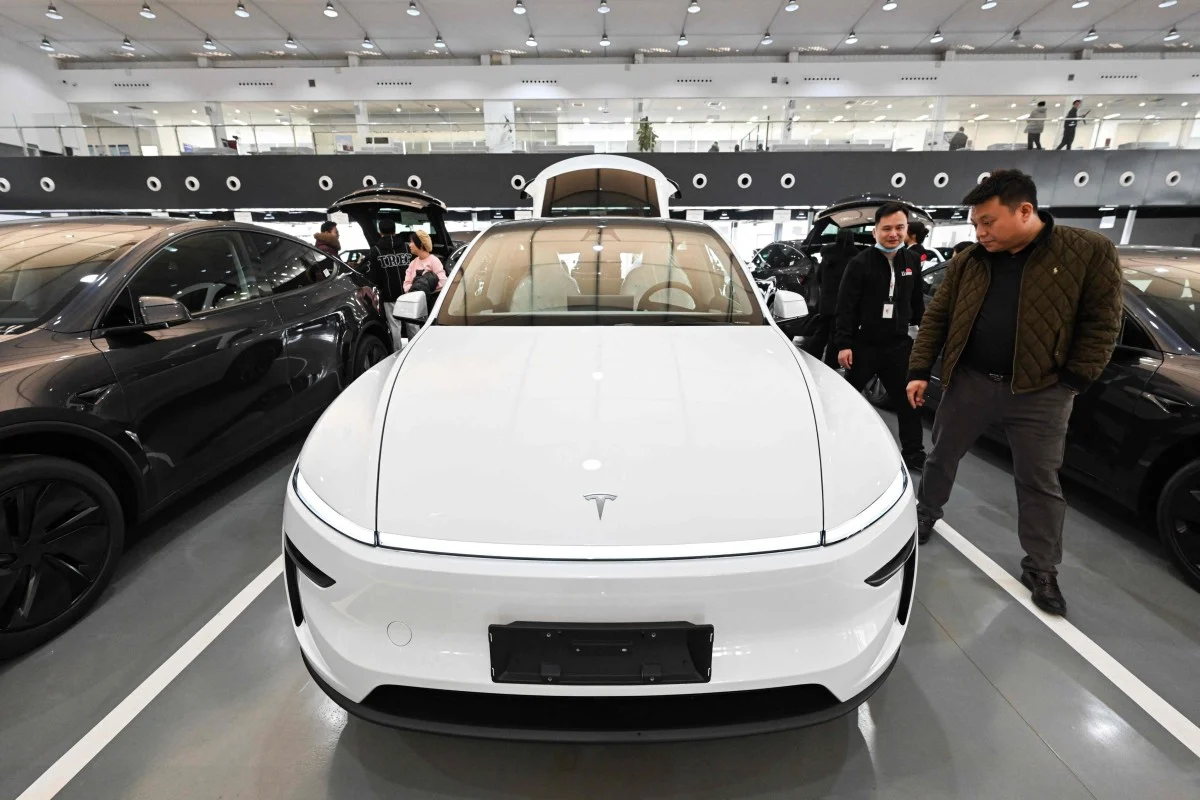
The best changes are not the flashy ones. Tesla says the redesign cut road noise by 22%, impact noise by 20%, and wind noise by 20%, helped by acoustic glass and revised materials. That reads like a quiet spec line until you picture a parent driving I-95 while a child sleeps in the back seat. A calmer cabin sells better than a louder promise.
Tesla also lists a 15.4-inch center touchscreen, seating for five adults, and up to 74 cubic feet of cargo space on the current U.S. page. Those numbers do not sound dramatic, but they tell shoppers the car has kept its core shape. You still get the crossover body, the flat load floor, and the screen-first cabin that made the name easy to recognize.
The non-obvious part is that the refresh did not need to reinvent the car. It needed to sand down the irritations. In mass-market vehicles, removing one daily annoyance can move more metal than adding one feature nobody asked for. A quieter ride may close a sale faster than another acceleration boast, because comfort repeats itself every mile.
Why familiar design can beat a louder redesign
Some buyers want a car that announces change. Most families want change they can live with. The updated Y keeps the rounded crossover shape, the simple cabin, and the charging habits owners already understand. That makes it easier for a shopper to move from curiosity to deposit. No one has to relearn the whole idea of the vehicle.
A real example sits in American suburbs where two-car homes are common. One driver may keep a gasoline SUV for towing or long rural trips, while the Y becomes the commuter, grocery runner, and weekend mall car. That role does not demand drama. It demands low friction, predictable mornings, and enough room for sports bags without folding the family around them.
This is where new Model Y features carry weight without turning into a tech lecture. Better noise control, revised ride feel, updated lighting, and a cleaner cabin give the owner something to notice on Tuesday morning. The car does not need to feel exotic. It needs to feel easy, because easy is what turns a test drive into a repeat order.
The Sales Story Is Bigger Than One Hot Launch
The headline sounds like a single victory lap, but the real sales story is wider and messier. Public reporting often groups Model 3 and Y deliveries together, so careful readers should not treat every Tesla number as a pure Y number. Still, the direction is clear. The Y remains the center of Tesla’s volume machine and one of the strongest forces in electric vehicle sales. Autovista24 reported that the Y accounted for 8.3% of global battery-electric car sales across the first nine months of 2025, far ahead of the next model on its list. That kind of lead changes how the whole market prices and plans. It should not be read as a promise for 2026, but it explains why every rival has to study the same benchmark before setting a price or building a trim ladder.
How global volume gives Tesla a pricing weapon
Scale changes the game before the buyer sees the window sticker. Tesla reported 341,893 combined Model 3/Y deliveries in the first quarter of 2026 out of 358,023 total vehicle deliveries. That means the company’s business still leans heavily on its two mass-market cars. It also means the Y is not a side project inside Tesla. It is part of the load-bearing wall.
This matters in the U.S. because scale gives Tesla room to adjust prices, financing, inventory, and production mix with unusual speed. A rival may have a strong SUV on paper, but if it sells in smaller numbers, every discount hurts more. Tesla can spread factory costs across a much larger base, then use that room when demand softens or competitors cut prices. A dealer-backed rival can answer with a weekend discount; Tesla can respond across regions and trims without changing its whole plan.
The counterintuitive point: high volume can make a car feel less special, but it can also make it safer to buy. More cars on the road means more owner advice, more used listings, more accessories, more repair familiarity, and more data in the hands of insurers and lenders. Boring can become a sales edge. In a market filled with new badges, plain confidence has value.
Why China and Europe still shape American choices
American shoppers may not care what happens in Shanghai or Berlin, but those factories shape what shows up in U.S. conversations. Reuters reported that Tesla’s China-made EV sales rose 39.4% year over year in May 2026, with Model 3 and Y vehicles from Shanghai reaching 85,982 units including exports. That kind of factory output keeps the Y in the global conversation even when local markets swing.
Europe sends a similar signal. Reuters reported on June 25, 2026, that Tesla planned to raise Berlin output by 20% to 7,500 vehicles a week from October, aimed at demand for the Y. A production increase does not prove unlimited demand, but it does show Tesla still sees enough orders to add workers and capacity.
For a buyer in Ohio or Florida, that may sound distant. It is not. Global demand helps keep the platform funded, refreshed, and visible. It also puts pressure on competitors that must fight the same vehicle across several continents, not one market at a time. That global fight can lead to better lease deals, faster updates, and sharper features at home. When overseas plants keep pace, parts, software lessons, and supplier fixes can feed back into the same vehicle family.
What American Shoppers See Before They Click Order
The U.S. buyer often reaches the Y through a different door than the global buyer. In America, the question is not only “Which EV wins?” It is “Which EV can replace a normal crossover without turning my week into a charging plan?” That is where the Y keeps finding daylight. The product is only half the sale. The other half is whether the buyer can picture the first month without stress. This is why a loud launch matters less than a quiet first month in the owner’s garage.
Range, charging, and the driveway test
Tesla’s U.S. page lists up to 321 miles of EPA-estimated range for a rear-wheel-drive version and charging that can add up to 160 miles in 15 minutes under suitable Supercharging conditions. Those figures are not magic, and real range still depends on weather, speed, tires, and load. Yet they are enough to make many buyers stop worrying about the average workday.
The driveway test is plain. Can you leave home with a full battery most mornings? Can you reach a weekend destination without hunting for a charger nobody trusts? Can you explain the plan to a spouse who does not read EV forums? If the answer is yes, EV market share can grow outside early-adopter circles. The car becomes a routine purchase, not a household debate. The vehicle does not have to cover every corner of America; it has to cover the owner’s real map.
A family in Atlanta, for example, may charge at home five nights a week and use public chargers only on trips to Savannah or the Smokies. That is not a wild lifestyle shift. It is a new fuel habit. The easier that habit feels, the less price alone decides the sale. A cheaper EV with a messier charging story may lose even when the spreadsheet says it should win.
Why ownership confidence beats spec-sheet bragging
EV shoppers talk about range, but they buy confidence. They want to know whether winter will punish the battery, whether service will be annoying, whether software updates will break a habit, and whether the car will hold value after three years. No single spec answers those fears. The answer comes from the total ownership picture.
This is where EV buying checklist for American drivers belongs in the buyer journey. A shopper needs to compare charging access, insurance quotes, tire cost, local service, and home electrical work before deciding. The Y benefits because many of those answers are easier to find from current owners. You can search a local group and get ten replies before dinner.
There is also a social proof effect that Tesla rarely needs to pay for. When your neighbor owns the same car, the sales pitch moves from the showroom to the sidewalk. You hear what squeaks, what works, what annoys them, and whether they would buy it again. That kind of plain feedback can beat polished ads, because it arrives without a sales badge attached.
Where Rivals Can Still Hurt Tesla
A sales lead is not a shield. The Y’s success makes it the target every rival studies, prices against, and tries to outflank. Hyundai, Kia, Ford, GM, Volkswagen, BYD, and newer Chinese brands all attack from different angles. Some chase lower prices. Some chase faster charging. Some chase style. Some simply offer buttons. The next stage of the market will not reward Tesla for being famous. It will reward whichever brand makes electric ownership feel least risky for the widest group of buyers. Dominance invites copycats, and copycats often find the blind spots the leader stopped seeing.
The price fight is not over
The Y wins many comparisons because it sits at the center of price, range, charging, and brand awareness. That center can shift. If a rival offers a lower payment with enough range and a stronger dealer experience, some buyers will not care which EV leads the charts. A $70 difference in a monthly payment can overpower brand loyalty when grocery bills are already high. This is why the next discount fight may be won by the brand with the cleanest monthly story, not the loudest fan base.
EV market share is also not the same in every place. The IEA reported that China accounted for six out of ten electric cars sold globally in 2025, while Europe grew more than 30% and the U.S. moved at a different pace. A car can dominate one region and face a harder fight in another.
That creates a trap for Tesla. The company can win global attention while still losing certain households. A buyer who needs local dealer service, a softer cabin style, or a lower lease payment may walk away. A bestseller can miss your driveway. That is not a failure of the product; it is proof that the mass market has more than one kind of buyer.
Software trust may decide the next round
Tesla’s software image still pulls buyers in, but it also raises the bar. Owners expect fast updates, clean routing, smart charging, and driver-assist features that behave in a way they can trust. When expectations climb, small failures feel larger. A route planner that picks the wrong stop once can become the story a family repeats for months. A screen can feel modern on a test drive and tiring after a year if basic actions require too much attention.
This is where rivals have an opening. They do not need to copy Tesla’s entire playbook. They can win cautious shoppers with physical controls, clearer driver-assist messaging, longer warranties, or a dealer who answers the phone. That sounds old-fashioned. It may work, especially for buyers who want an EV without joining a brand culture.
A shopper comparing the Y with an Ioniq 5, EV6, Blazer EV, or Mach-E may not ask which company has the grander future. They may ask which vehicle makes the next 48 months feel calmer. For many Americans, the winner will be the one that turns electric driving into less of a topic at dinner. Quiet confidence is still a feature.
Conclusion
The refreshed Y is not winning because it is the newest idea in the EV aisle. It is winning because it sits at the point where range, charging, cargo room, owner familiarity, and price pressure meet. That is a harder trick than it looks.
For U.S. shoppers, the lesson is practical. Do not buy the chart leader because it leads a chart. Buy it only if your home charging, commute, family space, insurance quote, and road-trip habits line up. That is why the Tesla Model Y remains so hard for rivals to catch: it answers enough normal questions before the shopper has to ask them.
The next battle will be quieter. It will happen in lease offers, service visits, charging stops, and used-car prices. Check the total ownership math, read local owner feedback, and use a home charging cost guide before you choose. The best EV is the one that still feels smart after the first payment clears.
Frequently Asked Questions
How much range does the refreshed Model Y offer in the U.S.?
Tesla lists up to 321 miles of EPA-estimated range for a current rear-wheel-drive version on its U.S. page. Real-world range can drop with cold weather, high speeds, roof cargo, larger wheels, and heavy cabin heat or air conditioning.
Is the refreshed Model Y worth buying over the older version?
It can be worth it if cabin noise, ride comfort, and interior updates matter to you. The older version may still make sense if the discount is large, the condition is strong, and you care more about payment size than refinements.
Why does the Y sell better than many other electric SUVs?
It combines strong range, broad charging access, familiar packaging, high owner visibility, and aggressive pricing moves. Many rivals beat it in one area, but fewer match the full mix that everyday crossover buyers compare before signing.
Does the refreshed model qualify as a family car?
Yes, for many households. It has five-seat packaging, a large cargo area, easy home charging for daily use, and enough range for common regional trips. Larger families may still need a three-row SUV or a second vehicle.
What should Americans check before buying an EV?
Check home charging cost, panel capacity, insurance quotes, tire prices, local service options, winter range loss, and public charging on your common routes. The monthly payment is only one part of the real ownership picture.
Is Tesla still ahead in charging convenience?
Tesla still has a strong charging advantage in many U.S. regions because Supercharger access is broad and route planning is built into the car. Local gaps can still exist, so buyers should check chargers near work, family, and trip routes.
Are other EV brands catching up fast?
Yes. Hyundai, Kia, GM, Ford, Volkswagen, and Chinese brands are improving range, comfort, price, and charging speed. Tesla’s lead is strong, but it is not permanent. Shoppers now have better choices than they had a few years ago.
Should I wait for newer electric SUVs before buying?
Wait if your current car is reliable, your home charging setup is not ready, or you expect better lease deals soon. Buy now if the vehicle fits your routes, the payment works, and you have checked the total cost beyond the sticker.