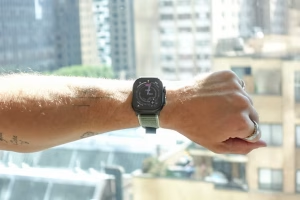

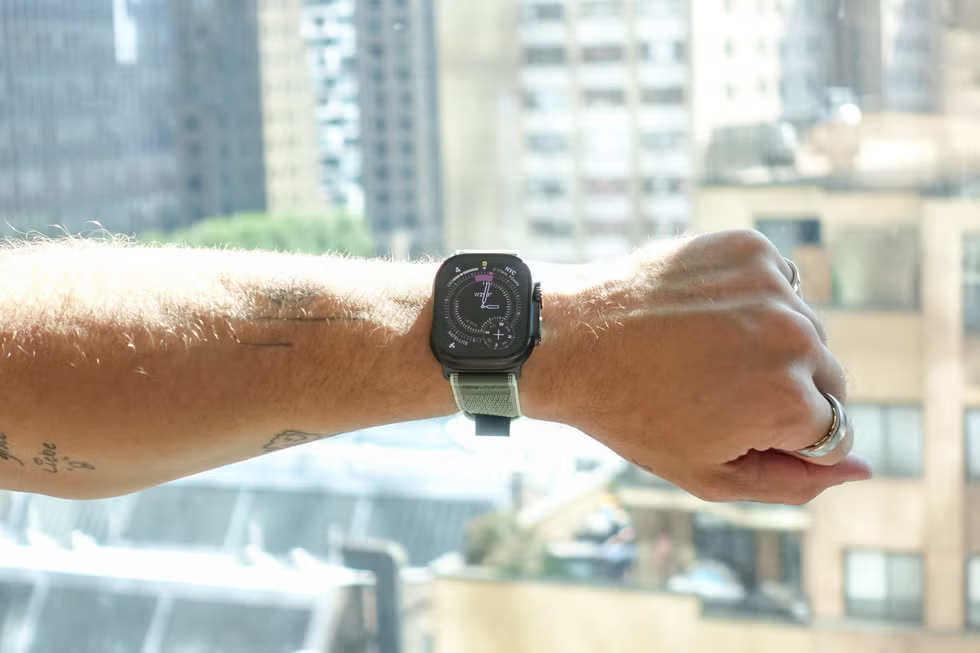
Your wrist is no longer a place for step counts alone. The Apple Watch Series 11 has moved into a more serious health lane because its blood pressure-related alert now carries FDA clearance in the United States. That does not mean the watch has become a cuff, a doctor, or a tiny clinic strapped to your arm. It means the device can look for long-running patterns that may point toward hypertension and then push you to confirm those signs with a real blood pressure cuff. That is the part many shoppers miss. For readers who follow consumer health technology coverage, this is the line between useful early warning and risky overconfidence. The smartest buyer will treat the alert like a smoke alarm, not a lab result. It can tell you something may be wrong. It cannot tell you the whole story. That difference matters more than the headline, especially for Americans trying to manage health costs, busy schedules, and delayed doctor visits.
The Approval Changes Expectations, But Not the Medical Rules
The headline sounds simple: Apple gets a health win, shoppers get a new reason to buy, and wearable tech takes another step into medical territory. The reality is sharper. FDA clearance gives the feature a defined role, but that role is narrower than many people assume. It is built to notice patterns that suggest possible high blood pressure, not to measure your blood pressure on demand while you stand in a grocery line. That matters because blood pressure is not a casual wellness metric. A wrong reading can scare someone into bad choices, while a missed pattern can leave a risk sitting in the dark. Apple’s challenge is to give people a useful warning without making the watch sound more certain than it is. The best reading of this news is sober: stronger consumer screening, same medical follow-up. It also changes the language shoppers should use. Asking whether the watch “takes blood pressure” leads to the wrong answer. Asking whether it can flag possible long-term hypertension risk leads to a better one. That small shift in wording keeps expectations honest before money changes hands. It also protects the reader from the worst version of health tech marketing, where a serious condition gets squeezed into a feature label and the follow-up steps fade into fine print.
Why FDA clearance is not the same as a cuff reading
A cuff squeezes your arm and estimates pressure inside your arteries at that moment. The watch does something different. It reads signals from the optical heart sensor over time, then looks for patterns that may match chronic hypertension. That makes the feature closer to screening than measuring.
That distinction protects users from a bad habit: treating a wearable alert as a diagnosis. The official FDA 510(k) database record describes the tool as a software-only medical application that looks at photoplethysmography data collected by the watch. It also says the tool is not meant to replace standard diagnosis or blood pressure surveillance. Plain English: it can raise a flag, but it cannot give you the numbers your doctor needs.
Here is the non-obvious part. A feature that refuses to show numbers may be safer for the average person than one that pretends to be a cuff. Numbers feel final. A warning feels like a prompt. For a health tool that can miss cases and create false alarms, a prompt may lead to better behavior than fake certainty.
What the alert is meant to trigger next
The ideal outcome is not panic. It is a boring, practical follow-up. You get a notification, buy or borrow a validated upper-arm cuff, take readings for several days, and bring those results to a clinician. That is less exciting than a watch diagnosing disease, but it is closer to how good care works in busy American clinics.
Think about a 46-year-old warehouse supervisor in Ohio who has skipped annual checkups because his shift changes every month. He feels fine. His watch sees a month-long pattern and nudges him to check. A week of cuff readings later, he has enough information to book a visit with a primary care doctor. The alert did not cure anything. It shortened the distance between silence and action.
FDA-cleared hypertension alerts work best in that quiet middle ground. They are not emergency sirens. They are not fitness badges. They are a nudge toward proof, and proof still comes from standard readings taken the old-fashioned way.
What Apple Watch Series 11 Approval Means for Everyday Health Tracking
Health tracking has always had a trust problem. People love charts, streaks, rings, and sleep scores, but they also know a watch can be wrong. This approval raises the stakes because blood pressure sits closer to real medical risk than calories burned or standing minutes. That makes the watch more useful, and more dangerous, depending on how you treat the information. The friction is not technical alone. It is emotional. A person may trust the watch too much because it feels personal, or ignore it because it sounds like another app notice. The feature has to land between those extremes. It should be strong enough to make you act, but careful enough to leave the final call to proper measurement and medical advice. That is a hard design problem, not a minor wording issue, because fear spreads faster than careful follow-up. The watch has to make risk feel worth checking without making healthy users feel trapped in a medical guessing game.
Why passive screening fits the way people live
Most Americans do not wake up eager to check their blood pressure. They check it after a scare, during a doctor visit, or when a family member pushes them. Passive screening fits around that weakness. The watch keeps looking while you live your normal life.
That is why smartwatch blood pressure monitoring has become such a hot search topic. People want health insight without adding one more chore. A cuff asks for stillness. A clinic asks for time. A wearable asks for patience and enough days of clean signal. That trade-off works because hypertension often grows in the background, long before someone feels sick.
The counterintuitive benefit is that this kind of alert may help the people who are not health-obsessed. The person who logs food, checks sleep debt, and tracks workouts already has a health routine. The person who ignores all of that may get more value from a passive warning because it meets them where they are.
Where the feature can still miss the mark
The watch does not know your whole body. It does not know whether you drank too much coffee, slept badly, changed medication, or had a stressful month at work. It also cannot promise that no alert means no problem. A silent watch should never become permission to skip care.
This is where Apple has to walk a tightrope. Apple Watch health features have become more serious over time, from irregular rhythm alerts to fall detection and sleep apnea notifications. Each one can help, but each one can also make users feel watched over in a way that exceeds what the device can prove.
Picture a retired teacher in Arizona who already has normal cuff readings at home. She gets no alert for months and starts assuming her pressure is fine without checking. That is the wrong lesson. The better lesson is simple: the watch can add a layer, but it should not replace the layer that already works. A cuff still belongs in the house if blood pressure is part of your risk profile.
How U.S. Buyers Should Think Before Upgrading
A new health clearance can make a purchase feel responsible. That is useful for Apple, but not always for your wallet. Before buying, U.S. shoppers should ask a harder question: will this feature change what I do, or will it become another setting I forget after setup? Many people buy health tech with honest intent, then let the charger cable, app permissions, and notification fatigue wear them down. The real test is not whether the feature sounds impressive on a product page. The test is whether you will wear the device enough, read the alert calmly, and follow through with cuff readings when asked. A watch sitting in a drawer cannot screen anyone, and a warning dismissed as noise cannot change care. Without that behavior, the health pitch turns into decoration, another shiny promise that never reaches the exam room. This is why the upgrade decision should begin with your habits, not the keynote. A person who charges the watch nightly, wears it to sleep, and keeps Health app settings current has a better chance of getting value than someone who leaves it on a desk by Friday.
Who gets the most practical value from the feature
The strongest fit is a person who has no hypertension diagnosis, is old enough to use the feature, and does not check blood pressure on a regular schedule. That might be a middle-aged parent with a family history of heart disease. It might be a frequent traveler who sees doctors less than planned. It might be a worker juggling two jobs and treating health care as something to handle later.
For that person, FDA-cleared hypertension alerts can create a first step. The value is not the buzz on the wrist. The value is what happens after it: a cuff log, a phone call, a clinic visit, and a conversation grounded in actual readings.
Still, the feature is not for every buyer. If you already have diagnosed hypertension, the watch is not meant to manage your treatment. If you are pregnant, it is not intended for you. If you want instant systolic and diastolic numbers, this will disappoint you. A lower-cost validated cuff may be the better buy.
Why older supported watches matter
The approval also changes the upgrade math because support is not limited to the newest watch. Apple says the hypertension notification feature works on Series 9 or later and Ultra 2 or later, with the needed software and a supported iPhone. That means some users can get the benefit without buying the latest model.
That detail matters in the United States, where device pricing can push people toward older hardware. A buyer standing in a Best Buy aisle may compare a discounted Series 9, a newer flagship, and an SE model. The surprise is that the SE may cost less but miss this health tool, while an older supported watch may fit the need better.
This is where best smart devices for everyday wellness can help readers think beyond launch hype. The smartest choice is not always the newest one. It is the device that matches your risk, your budget, and your willingness to follow through when the alert arrives.
The Bigger Shift Toward Consumer Health Devices
Wearables are becoming a front door to health care, but not the whole house. That shift is messy. Doctors want better patient awareness, but they do not want a flood of screenshots with no context. Patients want control, but they still need help reading the signal from the noise. This is the wider story behind smartwatch blood pressure monitoring. The product is not only a gadget story; it is a behavior story. If a watch turns hidden risk into a clear next step, it helps. If it turns normal body variation into constant worry, it hurts. The device maker, the user, and the clinician all have a role in keeping that balance. The deeper promise is not fewer doctor visits. It is better-timed doctor visits, backed by a reason to pay attention before symptoms or fear take over. That is a smaller claim, but it is more useful. The next phase of consumer health will depend less on adding more alerts and more on teaching people what to do with the alerts they already receive.
Why doctors may see more patient-generated questions
Clinics already see patients bringing heart rhythm alerts, sleep charts, and fitness data to appointments. Blood pressure-related notifications will add a new category of questions. Some visits will be useful. Others may be driven by anxiety. Both are part of the price of moving health signals into consumer devices.
A family doctor in Dallas may soon hear, “My watch said I might have hypertension. What now?” That is a better opening than silence. The next move should be simple: confirm with proper readings, check risk factors, review medication and lifestyle, then decide whether treatment or monitoring makes sense.
Smartwatch blood pressure monitoring will not reduce the need for primary care. It may expose how thin primary care access already feels for many Americans. The watch can create awareness at home, but the health system still has to turn awareness into care, appointment by appointment.
How Apple can earn trust after the first alert
Trust is built after the notification, not before it. The setup screens, follow-up steps, and Health app language must keep repeating the same message: this is not a diagnosis. That may sound dull, but dull is good when people are making health choices.
Apple Watch health features have earned attention because they sit inside a product people already wear. That convenience is powerful. It also creates risk because the device feels personal. When something on your body speaks, you may give it more authority than it deserves.
The best future for wearable health is not a world where watches replace clinicians. It is a world where better questions reach clinicians sooner. A person who would have ignored risk for another year may show up with a week of cuff readings. That is progress. Quiet progress, but progress all the same, especially for families who avoid checkups until symptoms appear. For readers comparing connected care tools, how wearable tech fits into home health routines is the broader conversation this moment belongs to.
Conclusion
The FDA clearance marks a serious turn for wearable health, but the smartest response is restraint. This is not a magic wrist cuff, and it is not a medical verdict. It is a pattern-based alert that can push the right person toward real testing at the right time. For U.S. buyers, the Apple Watch Series 11 now carries a stronger health argument, yet the value depends on what you do after the buzz. Buy it for awareness, not certainty. Set up the feature, understand its limits, and keep a validated cuff in the picture if blood pressure matters in your life. The people who gain most will not be the ones who brag about a new sensor. They will be the ones who act on a quiet warning before a silent condition becomes harder to manage. Treat the watch as a starting point, then bring the evidence to a professional who can help you decide the next move.
Frequently Asked Questions
Does the new Apple watch measure blood pressure numbers?
No. It does not show systolic or diastolic readings like a cuff. It looks for patterns that may suggest chronic high blood pressure over time, then sends a notification. You still need a standard cuff to confirm actual blood pressure numbers.
Is the FDA clearance the same as a medical diagnosis?
No. Clearance means the feature met the regulatory standard for its intended use. It does not mean the watch can diagnose hypertension. A clinician still needs proper readings, health history, and judgment before making a diagnosis or treatment plan.
Who can use the hypertension notification feature?
It is meant for adults 22 and older who have not already been diagnosed with hypertension and are not pregnant. Users also need a supported watch, compatible iPhone, current software, and wrist detection turned on.
What should I do after getting a hypertension alert?
Start by taking blood pressure readings with a validated cuff for several days. Save the numbers, note the time of day, and contact a healthcare professional. The alert is a reason to check, not a reason to self-treat.
Can no alert mean my blood pressure is normal?
No. A lack of notification does not prove normal blood pressure. The feature can miss some people with hypertension, and it may not collect enough usable data. Regular cuff checks still matter if you have risk factors.
Is this useful if I already have high blood pressure?
It is not designed to manage known hypertension or track treatment results. People with diagnosed high blood pressure should follow their clinician’s plan and use a standard blood pressure monitor. The watch can still support general wellness, but not treatment decisions.
Does the lower-cost SE model include this feature?
No. Apple says the hypertension notification feature is not available on the SE. Buyers who care about this specific health tool should check model support before choosing a discounted watch, since the cheapest option may not include the health function they want most.
Is a smartwatch enough for heart health tracking?
No single device is enough. A watch can help with awareness, activity trends, rhythm alerts, and safety tools, but heart health still depends on sleep, diet, movement, checkups, medication when needed, and honest conversations with a healthcare professional.